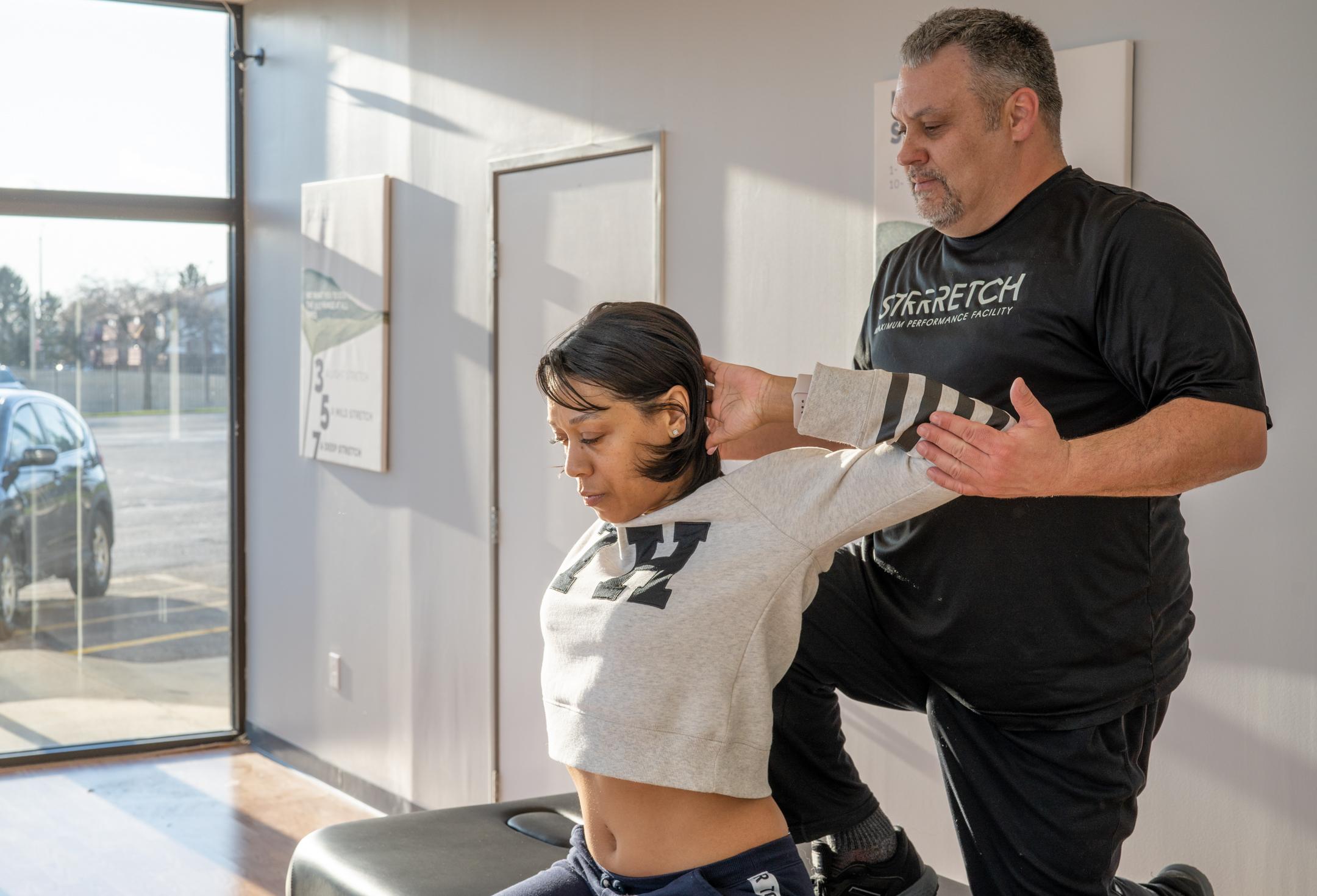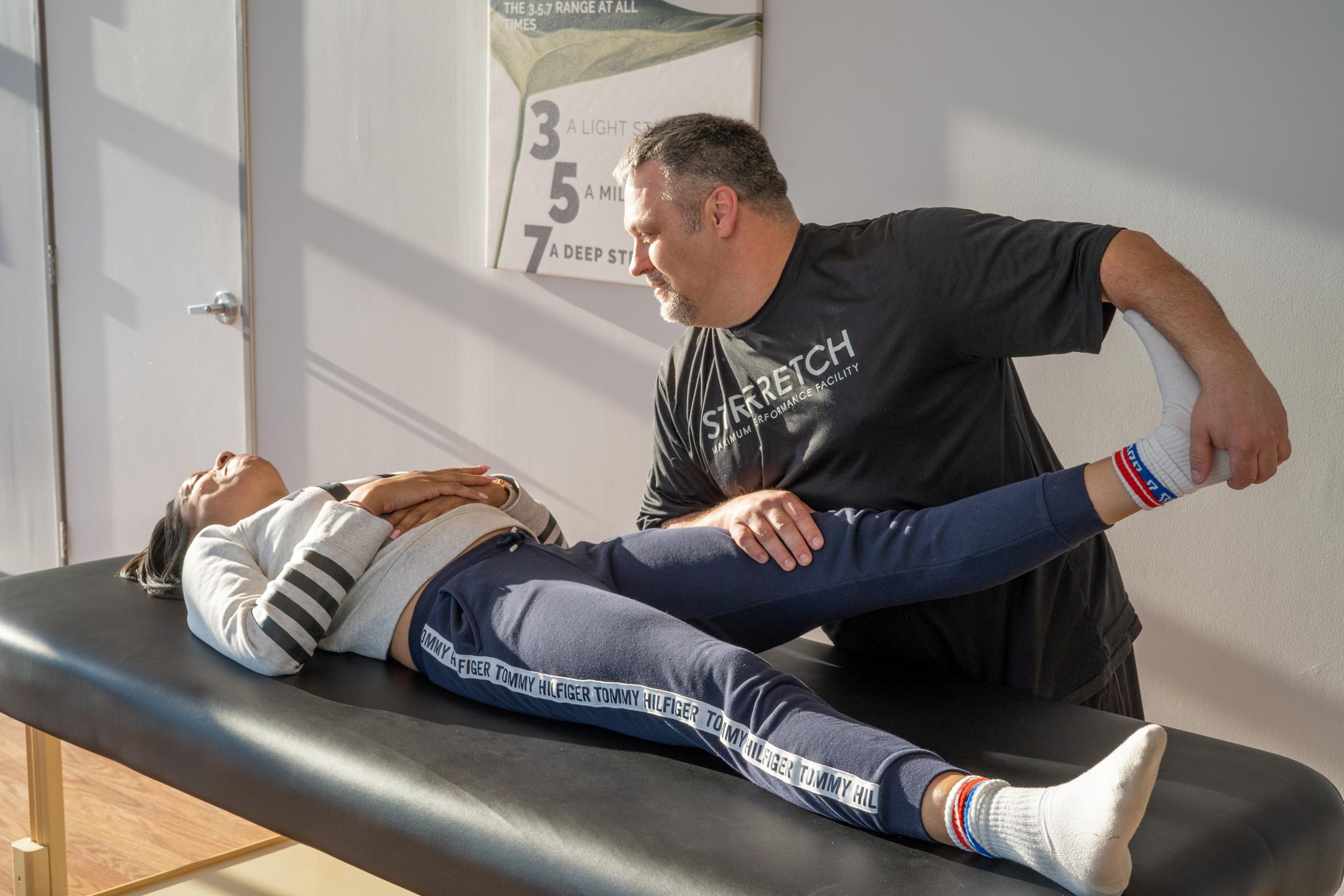
How Often Should You Get Assisted Stretching?
There's no single right number. Most people start with once a week and adjust from there: more often while you're building a habit or training hard, every two to four weeks once you're maintaining. Stretching on your own on the days in between matters as much as the session itself.
By The Strrretch Team · Strrretch, Frisco, Texas6 min read
Key takeaways
- Weekly is the most common starting rhythm; it's frequent enough to notice and easy to keep.
- Consistency beats intensity: a steady rhythm you keep is worth more than a burst you don't.
- General flexibility guidance favors stretching on most days, so a few minutes at home between visits counts.
- Your practitioner suggests a rhythm after your first session, based on how your body responds and what you want.
"How often should I come in?" is one of the first questions new clients ask, and the honest answer is that it depends on what you want from it. Someone keeping up with a marathon block needs something different from someone who sits at a desk all week and just wants to stop feeling stiff. What follows is how we think about frequency at Strrretch, and how to find a rhythm you'll actually keep.
The short answer
Start with once a week for the first month. After that, settle into whatever keeps you feeling the way you want: weekly, every other week, or once or twice a month. Stretch a little on your own in between.
Weekly is a sensible starting point for most people because it's frequent enough that one session builds on the last, and spaced enough to fit a normal schedule. It also gives you and your practitioner a few sessions to see how your body responds before deciding on anything longer term.
What the general stretching guidance says
Assisted stretching is one way to stretch, so the general flexibility guidance is a useful frame. The American Heart Association summarizes the American College of Sports Medicine's guidelines this way: stretch at least two or three times per week, with daily stretching preferable, and hold most stretches for 10 to 30 seconds (older adults up to a full minute). Harvard Health gives similar advice: you'll make the best flexibility gains if you stretch frequently, daily or on as many days as possible, and at the very least two or three times a week.
Two things follow from that. First, frequency matters more than any single session. Second, nobody needs to be on a table every day. The practical approach is a regular assisted session plus a few minutes of simple stretching on your own on the days in between.
Sources: American Heart Association News and Harvard Health Publishing.
Finding your rhythm by goal
Building the habit (your first month)
Come in about once a week. The first few sessions are where you learn what the routine feels like, where you tend to be tight, and how you feel in the days afterwards. Some clients like two shorter visits a week at the start; that's fine too if it suits your schedule.
Training for something
Runners, golfers, lifters and weekend athletes often prefer weekly or more during a heavy block, and many time a session for the day after their hardest workout or long run. When the season or the race is done, you can ease back to a maintenance rhythm.
Sitting all day
If long hours at a desk or in the car are why you feel stiff, a steady weekly or every-other-week session works well, because the thing you're counteracting happens every day. This is also where short stretch breaks at work earn their keep. Getting up and moving through a few simple stretches during the day pairs naturally with a regular session.
Maintaining how you feel
Once you've found a level you're happy with, many clients settle on every two to four weeks. If you notice the stiffness creeping back sooner, that's a useful signal to tighten the gap.
Signs your current rhythm is working (or isn't)
- It's working if you look forward to the session, you notice you move more easily in the days after, and you're keeping the appointments without strain.
- Consider coming in more often if the loose, easy feeling fades well before your next visit, or each session seems to start from scratch.
- Consider spacing it out if you're consistently feeling good between visits and you're stretching on your own on the days in between.
- Change something if the schedule is becoming a chore. A rhythm you resent won't last, and a slightly less frequent one you keep will do more for you.
Tell your practitioner how you've felt since your last visit. The routine is the same purposeful full-body sequence each time, working through 130+ muscles, and your practitioner adjusts it from that feedback, so it helps them as much as it helps you plan the next appointment.
Does session length change how often you should come?
A little. The 25-Minute Strrretch ($67) is the efficient option and suits people who want to come in often. The 50-Minute Strrretch ($125) is 30 minutes of 1-on-1 assisted stretching plus 20 minutes on the AI Robot Massage, which many clients book less often, for example after a hard week. Plenty of people alternate between the two. The full comparison is in 25-Minute vs 50-Minute Assisted Stretching.
Making a regular rhythm affordable
If you know you'll come in regularly, packages and monthly memberships lower the per-session rate. Memberships come in 2, 4 or 8 sessions per month for each session length, which maps neatly onto every other week, weekly, or twice a week. Packages of 3, 5 or 10 sessions suit people who'd rather not commit to a monthly schedule. Nothing requires either: single sessions are always available at the published price. Every option and the membership terms are on the pricing page.
What to do between sessions
- Do a few minutes of gentle stretching on most days. Short and regular beats long and occasional.
- Stretch only to mild tension, never to pain.
- Break up long periods of sitting: stand, walk, and move through a couple of easy stretches.
- Notice what feels tight again first, and mention it at your next visit.
If you keep stretching on your own and still feel tight, read Why Do I Still Feel Tight Even Though I Stretch?
Assisted stretching at Strrretch is a wellness and recovery service, not medical treatment. If you have an injury, a medical condition, or pain that worries you, talk to your doctor or a physical therapist first.
Common questions
Can I get assisted stretching every day?
Most people don't need to, and a daily appointment is hard to sustain. A regular assisted session plus a few minutes of stretching on your own covers the "most days" guidance far more practically.
Is once a month worth it?
It can be, especially once you've built the habit and you stretch on your own between visits. If you're brand new, a few weekly sessions first will tell you much more about how your body responds.
Should I come in before or after a workout?
Many active clients prefer a session on a rest day or the day after a hard effort, when they want to unwind and loosen up. Tell your practitioner what you trained and when, and they'll adjust.
Who decides my schedule?
You do. Your practitioner can suggest a rhythm after your first session rather than before it, but it's always your call.
Start with two visits in one week
The easiest way to feel the difference frequency makes is the STRRRETCH 7-Day Reset: two visits in one week for $49 total. Visit 1 is a 50-minute session (about 30 minutes of 1-on-1 assisted stretching plus about 20 minutes on the AI Robot Massage, with the vibration plate included). Visit 2 is 25 minutes of 1-on-1 assisted stretching with the Deep Muscle Stimulator and vibration plate, completed within 7 days. Book Visit 1 and the team schedules Visit 2 with you in the studio. Returning clients can book from Client Booking. More about the service: assisted stretching in Frisco.
Strrretch offers wellness and recovery experiences. This article is general information, not medical advice. If you have an injury or a diagnosed condition, speak with your physician.