Why Do I Still Feel Tight Even Though I Stretch?
Often it's not the effort — it's that stretching alone is limited by what you can reach, how long you can hold it, and whether you can actually relax. Short holds, bracing, and only stretching the spot that feels tight are common reasons people stay stuck.
By The Strrretch Team · Strrretch, Frisco, Texas3 min read
Key takeaways
- Quick, tense stretches rarely give your body time to let go.
- The body is connected — the spot that feels tight isn't always the only place worth stretching.
- Long days of sitting and inconsistent routines undo a lot of good stretching.
- A practitioner can position, hold and adjust stretches in ways that are hard to do alone.
If you stretch regularly and still feel tight, you're not doing anything wrong by trying. Usually the issue is how stretching alone works: you're limited by what you can reach, how long you can comfortably hold a position, and whether you can relax while you're holding it. Below are the most common reasons people feel stuck — none of which need a diagnosis to recognise.
Are you holding your stretches long enough?
Most at-home stretching is quick: a few seconds per side before moving on. A stretch often only starts to ease once you've settled into it and breathed through it for a while. If you're rushing, you may be stopping right before the part that helps you feel looser.
Are you bracing instead of relaxing?
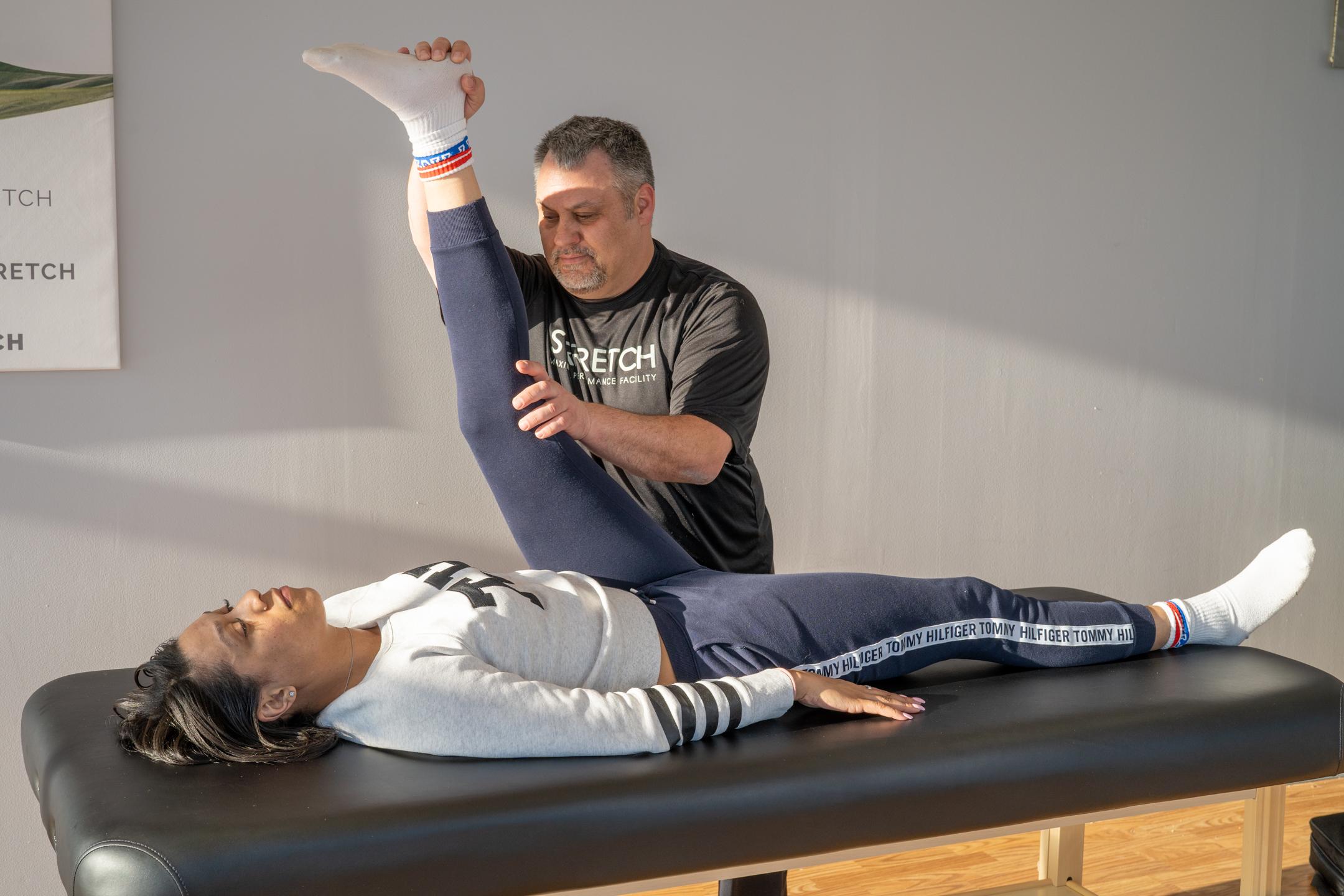
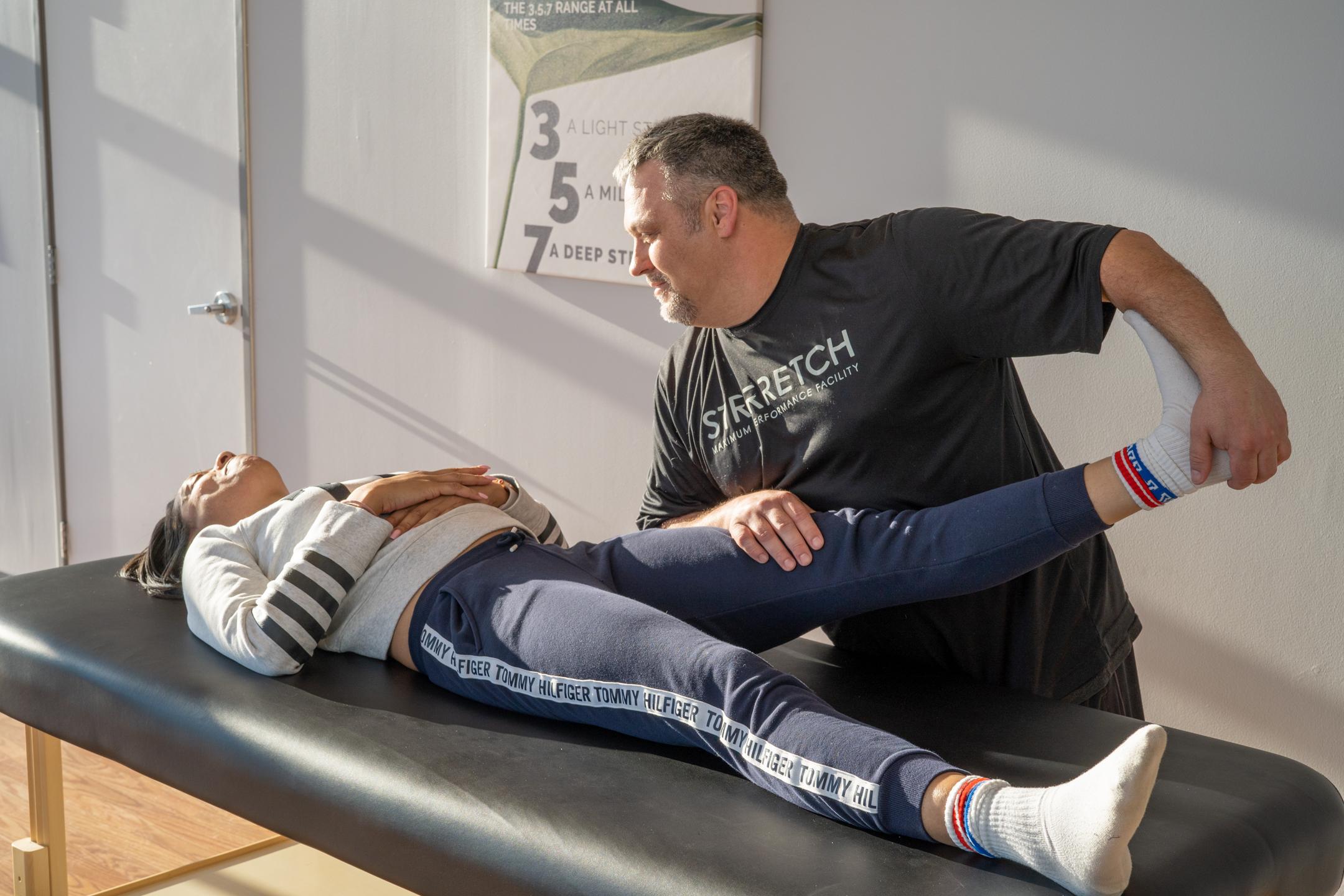
Stretching alone usually means balancing on one leg, pulling on a strap, or holding yourself in an awkward position. All of that takes effort, and effort means tension. It's hard to let a muscle relax while other parts of you are working to hold the position. Lying supported on a table while someone else holds the stretch removes most of that work.
Can you actually reach the positions you need?
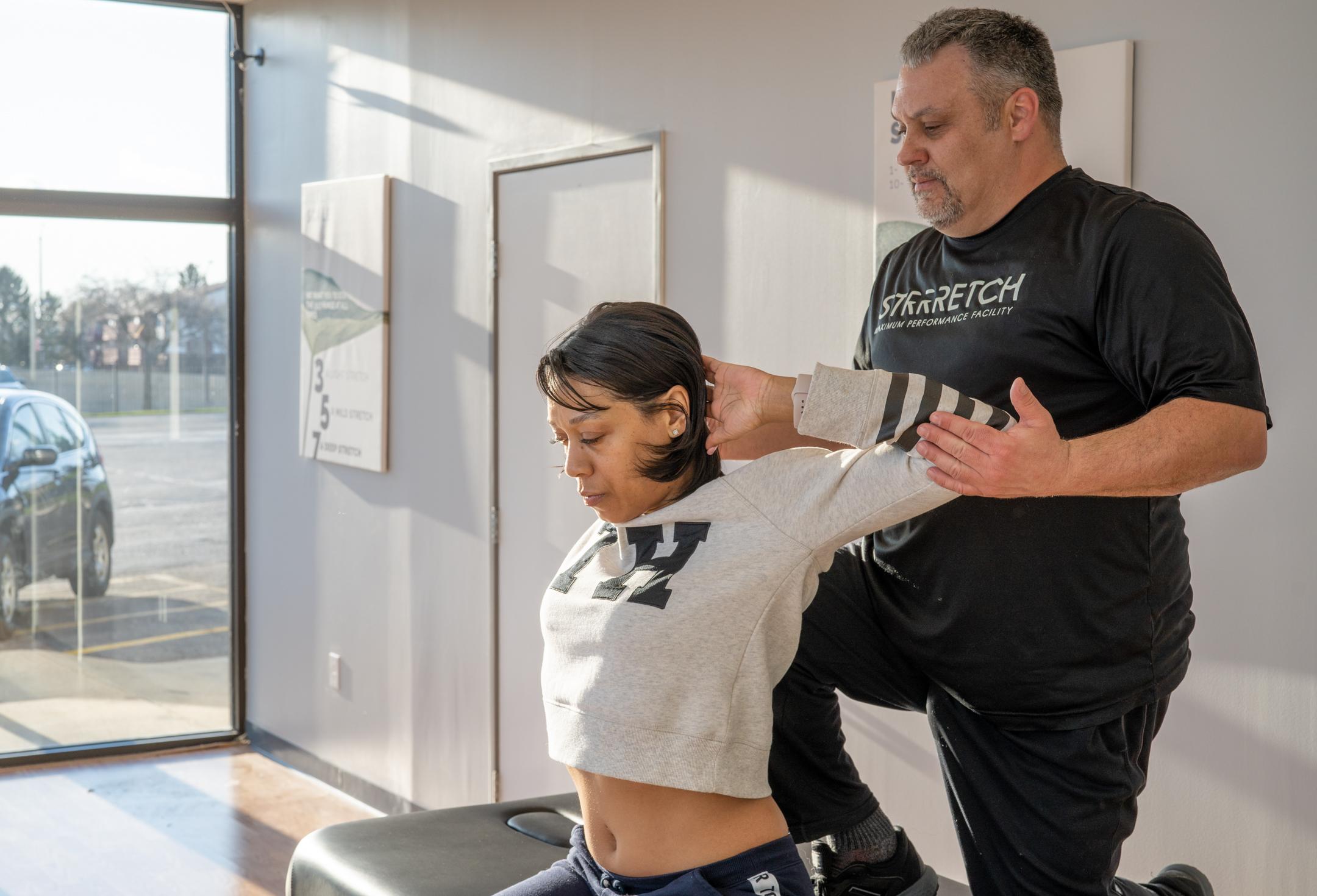
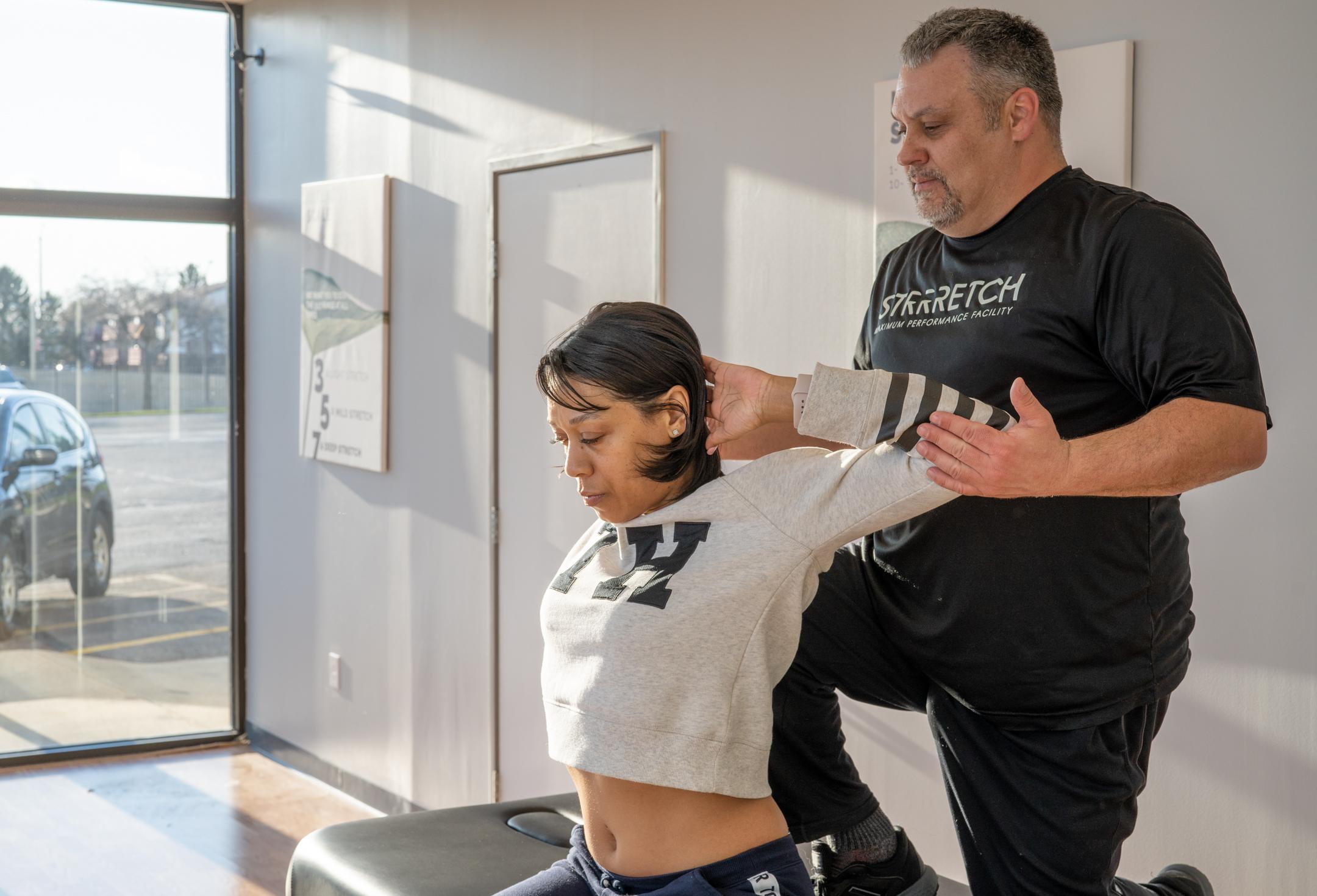
Some areas are simply awkward to stretch by yourself — deep through the hips, the back of the legs, the upper back and around the shoulder blades. It's common to either not get into the position at all, or get close and compensate by twisting somewhere else. A practitioner can place you precisely and keep you there.
Are you only stretching the spot that feels tight?
It's natural to go after the area that bothers you. But the body is connected: tight hips can show up as a stiff lower back, and tight shoulders can show up in your neck. If you only ever stretch the spot you notice, the areas around it can stay tight. That's why every session at Strrretch follows a full-body routine addressing 130+ muscles, rather than working one spot in isolation.
Is your day undoing your stretching?
Ten minutes of stretching doesn't go far against eight hours in a chair and an hour in the car. Long stretches of sitting keep the hips, hamstrings and upper back in the same shape all day. If you sit for work, you may notice tightness creeping back by mid-afternoon, however good you felt that morning. Getting up regularly can help; so can giving those areas dedicated attention.
Is your routine consistent?
Stretching is easier to benefit from as a habit than as a rescue. A burst of stretching after a bad week, followed by nothing for a month, is a common pattern — and a common reason people feel they never get anywhere. A realistic, repeatable rhythm usually beats an ambitious one you can't keep.
When should I talk to a professional?
Feeling tight is common. Sharp pain, numbness, tingling, swelling, pain after an injury, or tightness that keeps getting worse is different — see your physician. Assisted stretching at Strrretch is a wellness and recovery experience, not a diagnosis or medical treatment.
What changes with assisted stretching?
In an assisted stretching session, a practitioner deals with all of the above for you. They move you into positions you can't reach alone, hold them so you don't have to brace, and work through the full body in a consistent routine — adjusting pressure, range and time to what you tell them. You should feel a stretch, never pain. If you're curious what that looks like in practice, read What Is Assisted Stretching? and What Happens During Your First Assisted Stretching Session?
Try it in Frisco
The STRRRETCH 7-Day Reset is built for exactly this question: two visits, one week, $49 total. Visit 1 is a 50-minute session: about 30 minutes of 1-on-1 assisted stretching plus about 20 minutes on the AI Robot Massage, with the vibration plate included; Visit 2 is 25 minutes of 1-on-1 assisted stretching, with the Deep Muscle Stimulator and the vibration plate included, within 7 days, scheduled with you in the studio. Book Visit 1. Already a client? Use Client Booking.
Strrretch offers wellness and recovery experiences. This article is general information, not medical advice. If you have an injury or a diagnosed condition, speak with your physician.