What Happens During Your First Assisted Stretching Session?
You arrive a few minutes early in comfortable clothes, talk through what feels tight, then lie on a treatment table while your practitioner takes you through a full-body routine, adjusting to your feedback. On the 7-Day Reset, Visit 1 adds 20 minutes on the AI Robot Massage.
By The Strrretch Team · Strrretch, Frisco, Texas3 min read
Key takeaways
- Wear comfortable clothes you can move in — you stay fully clothed.
- You'll talk first, then stretch on a treatment table through a full-body routine.
- Speak up as you go: you should feel a stretch, never pain.
- On the 7-Day Reset, Visit 1 is a 50-minute session of stretching plus about 20 minutes on the AI Robot Massage; the team schedules Visit 2 with you.
Your first assisted stretching session is straightforward: a short conversation, and a full-body stretch on a treatment table. Nothing about it requires you to be flexible or to know what you're doing. Here's how it goes, step by step.
What should I wear to assisted stretching?
Comfortable clothing you can move in — athletic wear is ideal. You stay fully clothed the whole time. Leave stiff jeans and anything restrictive at home.
When should I arrive?
A few minutes early is plenty. It gives you time to settle in and talk through what you want to work on before your session time starts.
What will my practitioner ask me?
Before you start, your practitioner will ask what feels tight, what you've been doing lately — training, sitting, travelling — and what you'd like to get out of the session. Mention any injuries or conditions here too. This conversation shapes how they adjust the routine for you.
If you have an injury or a diagnosed condition, check with your physician before booking. Assisted stretching at Strrretch is a wellness and recovery experience, not a medical treatment.
What happens on the table?
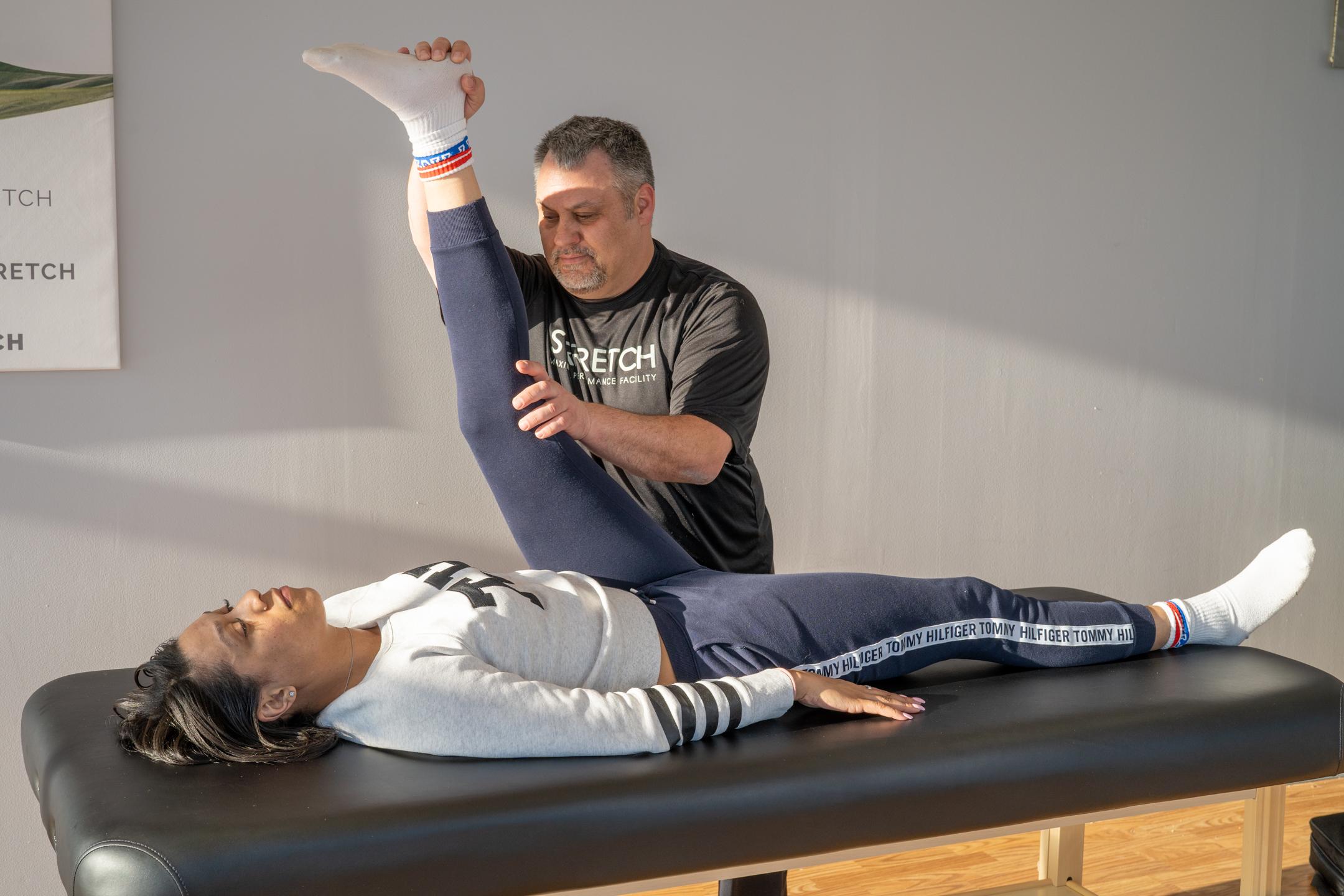
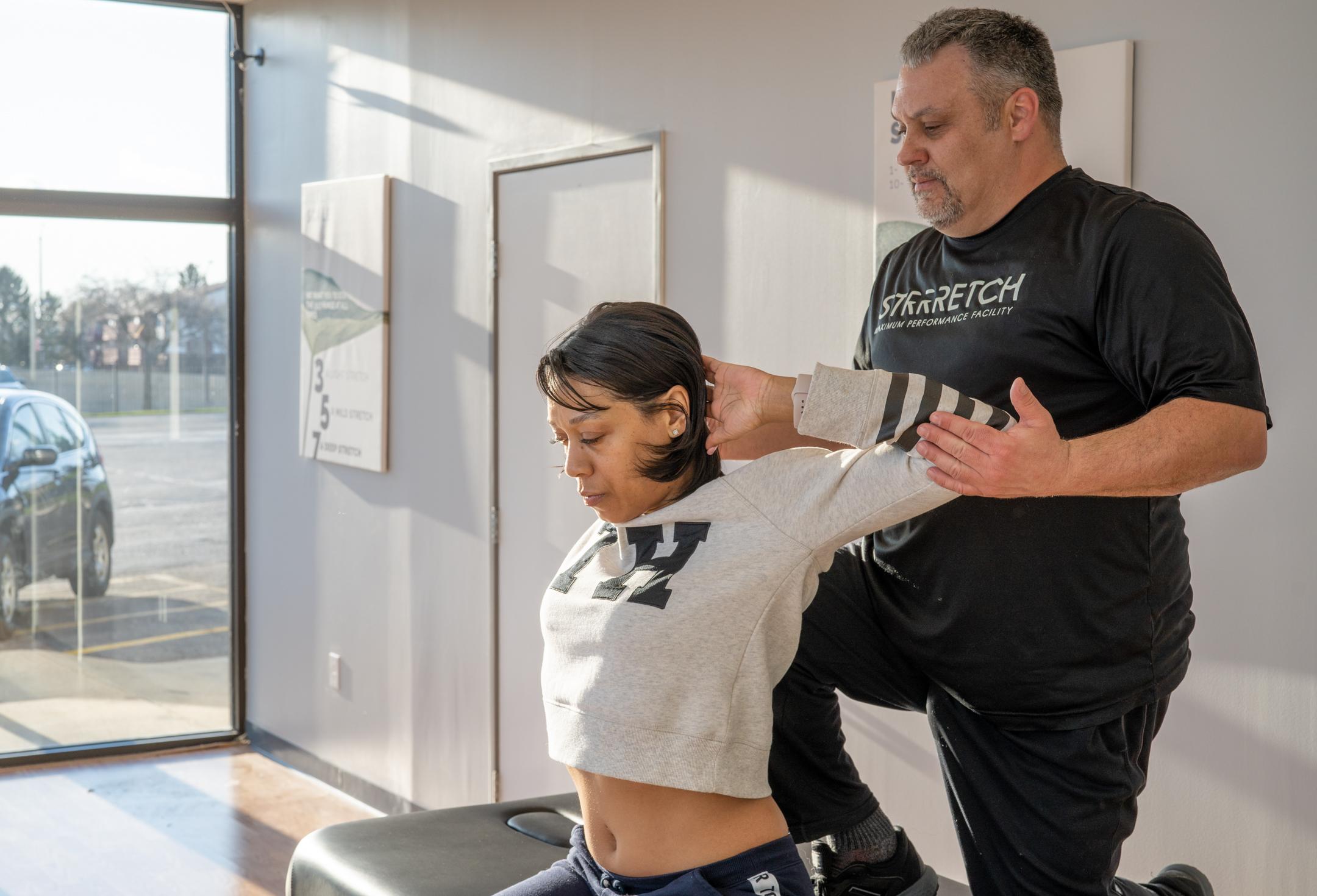
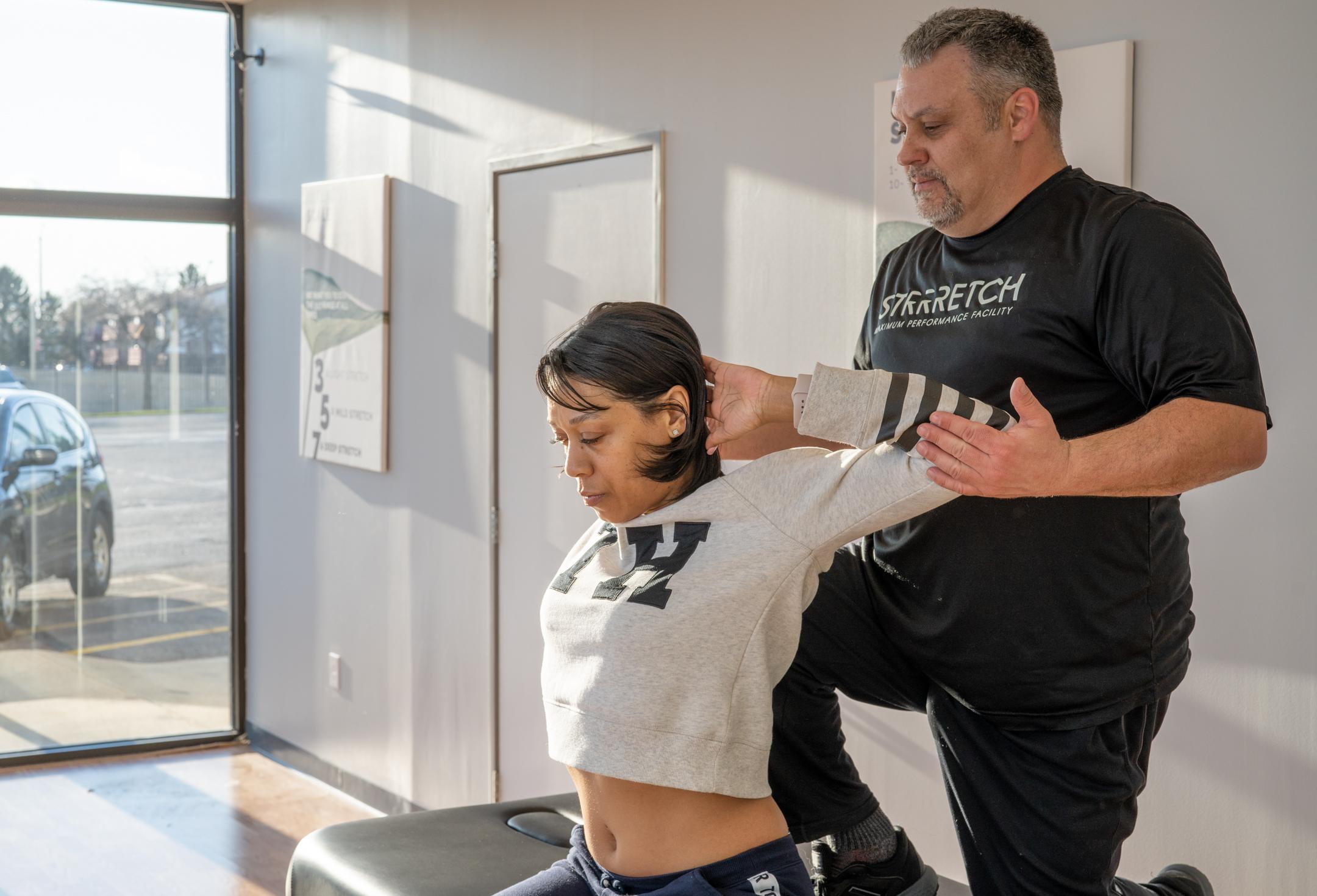
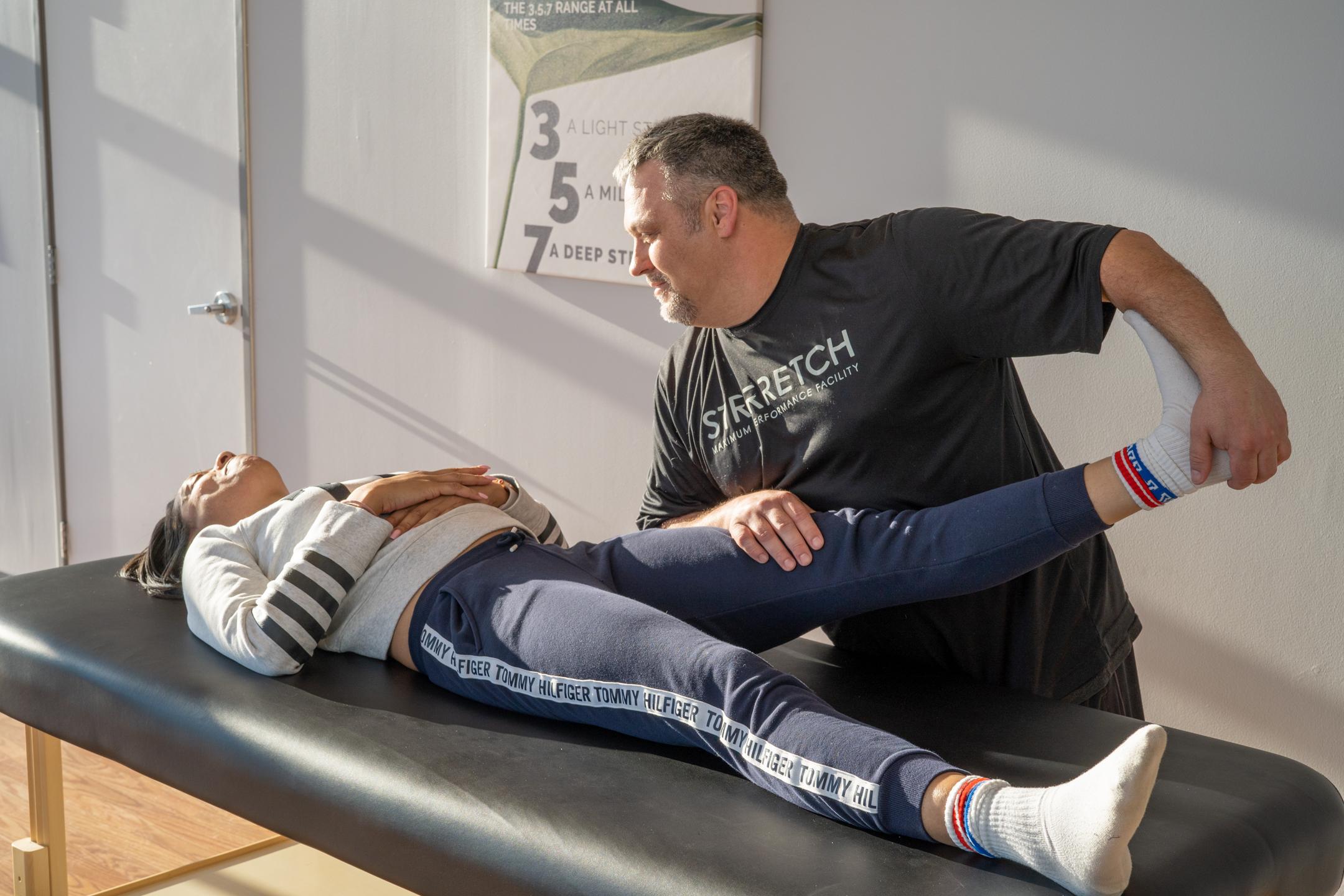
You lie on a treatment table and your practitioner moves you through each stretch — positioning your legs, hips, back, shoulders and neck, holding each stretch and easing it further as you relax. Every session follows a purposeful, full-body routine that addresses 130+ muscles, because the body is connected: tight hips can show up in your lower back, tight shoulders in your neck.
You don't need to do much besides breathe and let go. It's often easier to relax into a stretch when nothing is asking you to hold yourself up.
Does assisted stretching hurt?
It shouldn't. You should feel a stretch, not pain. Your practitioner adjusts pressure, range and time based on what you tell them, so speak up whenever you want more or less. There's no toughing it out.
What is the AI Robot Massage part of the 7-Day Reset?
On the STRRRETCH 7-Day Reset, Visit 1 is a 50-minute session: about 30 minutes of 1-on-1 assisted stretching followed by about 20 minutes on the AI Robot Massage — a private, heated AI massage experience designed to help you unwind and relax tight muscles — with the vibration plate included. It's a chance to try both experiences in one appointment.
What happens after the session?
Regular 25- and 50-minute sessions finish on the vibration plate. Take a moment before you rush off and notice how you're moving. Your practitioner can also suggest a realistic rhythm for future sessions if you'd like one — nothing requires a package or membership.
How does Visit 2 of the 7-Day Reset get scheduled?
Booking online reserves Visit 1 only. After Visit 1, the Strrretch team schedules your Visit 2 with you in the studio: 25 minutes of 1-on-1 assisted stretching, with the Deep Muscle Stimulator and the vibration plate included, completed within 7 days. Both visits together are $49 total.
Want more background first? Read What Is Assisted Stretching?, or compare session lengths in 25-Minute vs 50-Minute Assisted Stretching.
Book your first session in Frisco
Start with the STRRRETCH 7-Day Reset — two visits, one week, $49 total. Book Visit 1 or learn more about assisted stretching in Frisco. Already been in? Go straight to Client Booking.
Strrretch offers wellness and recovery experiences. This article is general information, not medical advice. If you have an injury or a diagnosed condition, speak with your physician.